The 9th Floor, Revisited: It was just Hacking
On lineage, obsession, and a projector room in Sweden
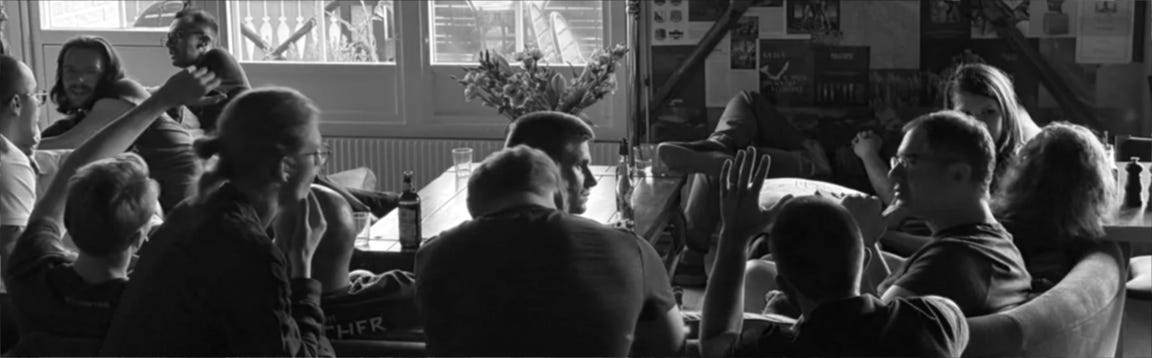
Today I finished a book I’ve been reading on and off for months and couldn’t get enough of. It isn’t new. It’s been around for decades. I’m simply glad I found it at all.
The book is Hackers: Heroes of the Computer Revolution by Steven Levy, published in 1984.
In retrospect, I consider myself lucky to have learned programming on my own. I started with C, shielded from academic structures and university courses, thinking it was just a hobby. I wanted to make little games.
The process was stupidly simple. You sit down and start hacking. You have a fuzzy idea of what the thing might become, and you don’t really plan it out. Why would you? The machine is right there. Mistakes are cheap. The most natural way forward is the lazy way: write a function, make it do the dumbest possible thing, compile, observe, adjust. Iterate.
Before you know it, you’ve nurtured a program into existence, the sun is rising outside your window, and you realize you’ve been awake all night.
What shocked me was how addictive it was. How natural. Time would dissolve! I was always left hungry for more. Eventually, I found a loose crowd of online strangers who seemed to feel the same way, people obsessed not with careers or tooling, but with computers themselves. That crowd gathered around Casey Muratori. His Handmade Hero series articulated, with startling clarity, the exact things I had already found intoxicating.
The Lineage
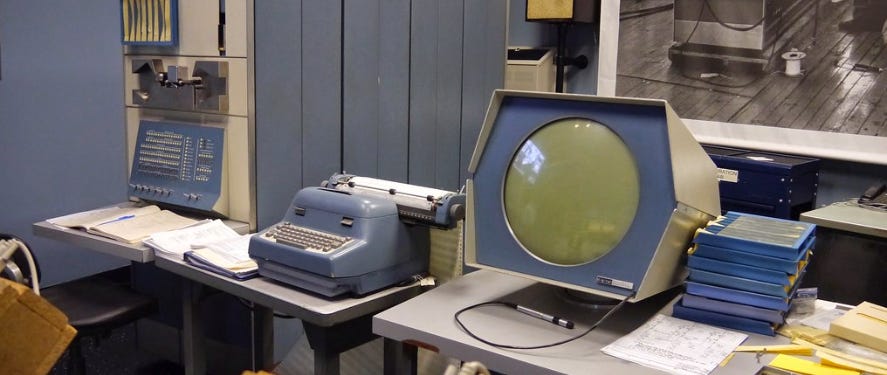
“PDP-1” by m.hawksey, CC BY 2.0
Reading Levy’s book felt like discovering ancestors I never knew existed.
In the 1950s, at MIT’s Tech Model Railroad Club, hackers crowded around the TX-0 and later the PDP-1 on the ninth floor of Tech Square. Peter Samson writing music compilers on punch cards. Richard Greenblatt living on Chinese food and Coca-Cola, staying at the console for seventy-two hours straight because he’d fallen too deep into some problem to stop. These weren’t professionals. They were obsessives.
They picked locks to get computer time. They learned to fool security systems. Any obstacle between them and the machine was treated as just another obstacle, a puzzle, that stood in their way to their precious machines.
Bill Gosper discovering HAKMEM algorithms at three in the morning, the kind of elegance you only find after staring at bit patterns long enough for them to start speaking back. Alan Kotok building hardware interfaces because the existing ones weren’t interesting enough. ""Uncle" John McCarthy and Marvin Minsky creating the conditions for all of this not by imposing structure, but by leaving doors unlocked and trusting that curious people would do curious things.
They understood something fundamental: you don’t teach hacking. You put the right people in a room with machines and get out of the way.
What struck me hardest was how familiar it all felt. The all-night sessions. The breathless explanations of clever tricks. The conviction that understanding the machine completely wasn’t just part of some process. It was the whole point of it.
Seventy years separated me from Greenblatt debugging assembly on the PDP-1, but we were doing the same thing. Chasing the same high. The technology had changed completely. The relationship had not.
That pull toward the machine, and the need to understand how it actually works, had somehow been handed down without ever being taught. It almost felt genetic.
The Room Where It Still Lives
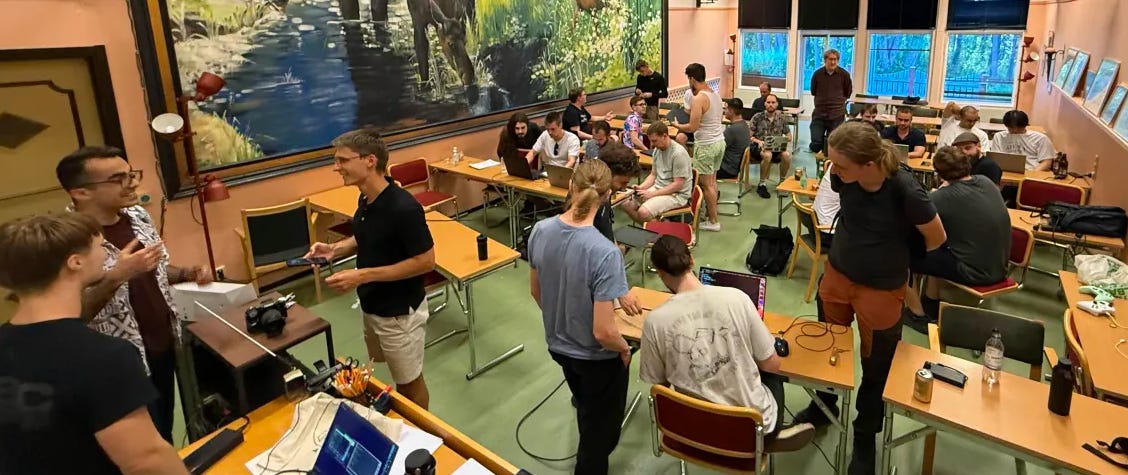
Two hundred miles south of the Arctic Circle, in a Swedish town you could cross on foot in fifteen minutes, surrounded by a pristine lake, hiking trails, clean air, and the endless daylight of a Scandinavian July. In any other context, that would have been the point of being there. None of it mattered though, in mid-July 2025.
What mattered was a modest projector room at the back of the only hotel in town.
People hunched over laptops in a jungle of cables and screens. Someone would finish implementing something and immediately drag the nearest person over, talking so fast they’d run out of breath explaining how it worked. A whiteboard surrounded by a silent crowd watching diagrams emerge in real time. Code snippets passed around. A spontaneous shader competition forming out of nowhere.
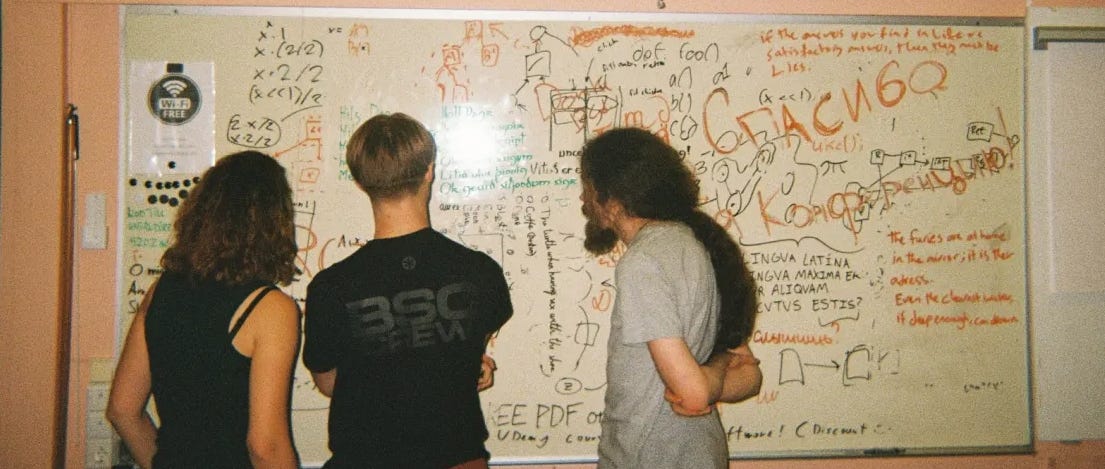
There were no titles. No credentials. The only currency was the cool thing you made and, more importantly, how you made it.
Time dissolved again. You’d think it was early afternoon and look up to find it was past midnight. The sleep deprivation by the end of that week had its toll on everyone.
That conference, The Better Software Conference was organized by the same loose community that formed around Casey Muratori’s work. We struggled to describe what we shared. It wasn’t a methodology or a manifesto. It was something you recognized more easily in behavior than in words. We talked about craftsmanship, about intentionality, about process over product.
In hindsight, we were simply reviving hacking.
What Levy described on the ninth floor of Tech Square, what happened at the Homebrew Computer Club in the 1970s, was happening there in Sweden in 2025. The technology had changed. The thing itself had not.
What Changed
The difference now is that the barriers have inverted.
The early hackers fought scarcity. Computer time was rare. Access was restricted. You had to outsmart guards and pick locks just to touch the machine. That adversity forged the belief that information should be free and access universal.
Today we’re drowning in access.
Frameworks, tutorials, abstractions, entire industries built to make things “easier.” University courses teaching the “correct” way to program. Tooling designed to ensure you never have to look too closely at what’s actually happening.
The barrier now isn’t getting to the machine. It’s remembering why you’d want to go deeper than you’re supposed to, when it’s so convenient not to.
Programming became industrialized. The craft got buried under decades of “best practices” and professional process. Most programmers never really touch the machine. They arrange prefabricated components at safe levels of abstraction. Going lower is framed as inefficient, indulgent, something “only game developers” and hobbyists care about.
Amusingly, what survives in hacker culture to this day is the same rebellious instinct it always had: ignoring what you’re supposed to do in pursuit of understanding and ultimate control.
What We’re Trying to Keep Alive
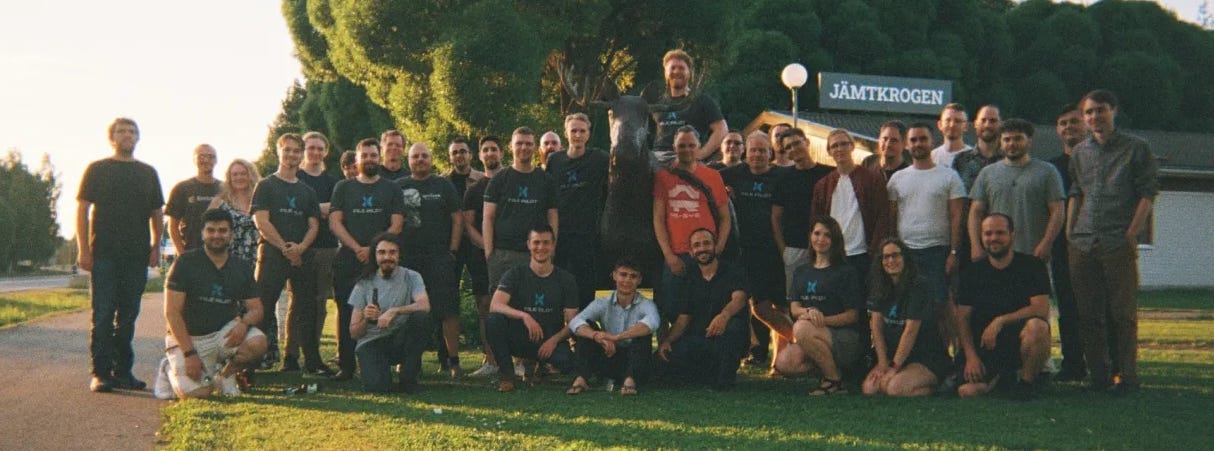
What Casey’s community represents, what the Better Software Conference represents, is archaeological work. We’re excavating a way of thinking buried under forty years of professionalization that treats curiosity as a liability.
The hacker ethic was never just about open source or free software. It was about the ecstatic experience of discovery. The belief that understanding things is valuable in and of itself. That the right way to learn a system is to take it apart and rebuild it until you know it intimately.
The challenge today isn’t access. It’s passion.
As AI enters programming, the risk isn’t that machines write code. It’s that we forget why we ever wanted to understand it. Friction disappears. Surprise disappears. Ownership disappears. Challenge, knowledge, control, gone! The temptation is to stop going deeper simply because we can, because it’s convenient.
But hacking was never about necessity or convenience. It was about desire.
I’m glad to see the lineage isn’t dead. I’m glad to see it’s underground again, waiting to be rediscovered. An older, quieter way of mastering machines that has been here all along.
We found our lineage.
Now the work is keeping rooms like that alive.